
Industrial Automation & Smart Manufacturing
Ready to see how managed IT can transform
your manufacturing enterprise?

Infrastructure That Keeps Smart Manufacturing Running
Manufacturing is no longer built on isolated systems. Today’s environments depend on connected platforms, real-time data, and tightly integrated production workflows.
Industry 4.0 has raised the bar. Systems must communicate continuously. Data must be accurate and immediate. Downtime is no longer an inconvenience; it is a production loss.
At Preactive IT Solutions, we work with manufacturers across Houston and South Texas that rely on automation, engineering systems, and real-time production data. Our focus is straightforward: keep the infrastructure behind these systems stable, connected, and reliable.
Industry 4.0 Runs on IT, Not Just Equipment
Smart manufacturing environments are built on interconnected systems that were never originally designed to operate as a single ecosystem.
These include:
- MES platforms
- ERP systems such as SAP, NetSuite, and Epicor
- IIoT devices and sensors
- Edge computing systems
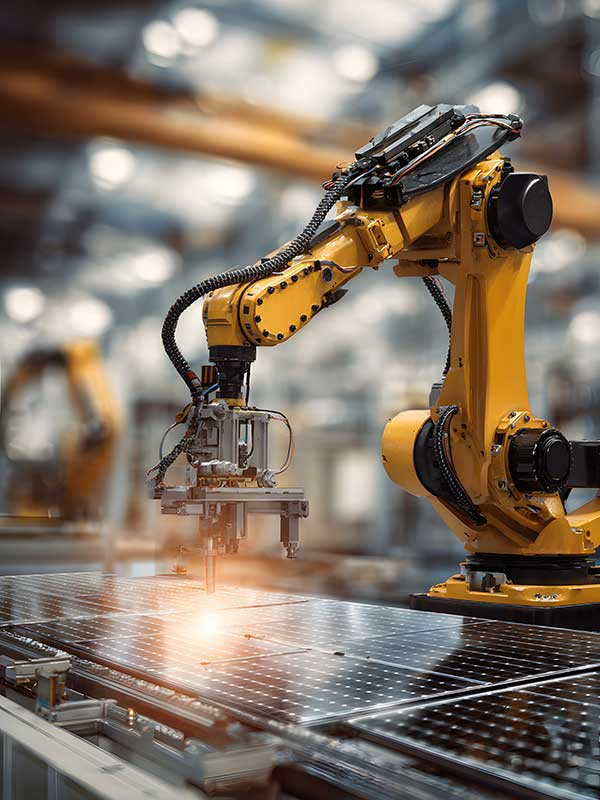
- Robotics and CNC machinery
According to the IBM Institute for Business Value, 91% of organizations plan to implement edge computing within five years. In manufacturing environments, that shift moves data processing closer to the plant floor, placing greater performance and reliability demands on local infrastructure.
If IT is unstable, production becomes inconsistent.
MES and ERP Systems Must Stay Aligned
MES systems provide production visibility. ERP systems manage planning, inventory, and financial alignment. In a modern manufacturing environment, these systems must stay synchronized.
When they do not:
- Production schedules drift
- Inventory becomes unreliable
- Reporting loses accuracy
According to McKinsey & Company, manufacturers with strong system integration can improve efficiency by 20–30%, while poorly integrated environments consistently underperform. We focus on maintaining the infrastructure and connectivity that keeps MES and ERP systems aligned and operational.

IIoT and Edge Computing Increase Complexity
IIoT devices now sit across the plant floor, continuously generating data on machine performance, environmental conditions, and throughput.
This introduces:
- High device density
- Continuous network demand
- Mixed protocols and communication patterns
At the same time, edge computing is pushing processing closer to production systems to reduce latency.
This improves responsiveness, but it also creates:
- Distributed infrastructure
- More points of failure
- Greater management complexity
We design and manage these environments so they remain stable, segmented, and capable of handling real-time data demands.
Infrastructure Behind Robotics and CNC Systems
Automation environments depend on more than machines. They rely on the infrastructure around them.
That includes:
- Engineering workstations
- File systems for design data
- Network communication between systems
- Vendor access for maintenance
If these systems fail, production stops.
We maintain the infrastructure supporting robotics and CNC environments so that automation systems operate without interruption.
Talk to Preactive IT Solutions
If you are evaluating IT support for smart manufacturing, Industry 4.0 IT services, or manufacturing automation IT support, Preactive IT Solutions can help you assess your environment and identify where instability or risk exists.
We work with manufacturers across Houston and South Texas that need reliable systems, stable integration, and infrastructure that supports modern production.
Real-Time Data Has No Margin for Error
Smart manufacturing depends on accurate, real-time data. If systems lag or fail, production decisions suffer immediately.
The impact is measurable. Deloitte estimates that unplanned downtime costs manufacturers $50 billion annually, with many facilities losing up to 20% of productive capacity.
In this environment, IT is not a support function. It is part of the production process.
We focus on uptime across:
- Networks
- Servers and databases
- Data systems and integrations
The goal is to eliminate IT-related disruption.

OT Network Management and Integration
Operational networks must be structured, not improvised. As environments become more connected, unmanaged networks introduce instability and risk.
Effective OT network management requires:
- Defined architecture
- Segmentation between systems
- Controlled communication paths
- Continuous monitoring
We help manufacturers maintain OT network performance while supporting integration with business systems and cloud platforms.
What Preactive IT Solutions Delivers
Preactive IT Solutions provides managed IT services designed for industrial automation environments.
Our focus includes:
- IT support for smart manufacturing systems
- MES and ERP infrastructure support
- OT network management and segmentation
- IIoT connectivity and performance
- Edge computing support
- Real-time system monitoring
- Infrastructure for robotics and CNC environments
We do not approach manufacturing IT as general support. We focus on the systems that production depends on.

Meet Some of Our Certified IT Support Specialists

Marlon Hyun
IT Support Specialist
CompTIA Security+ ce Certification, Cybersecurity Compliance Framework & System Administration



CASE STUDY
Global SOLIDWORKS PDM
Replication Deployment
"For any oil & gas company with distributed SOLIDWORKS teams, the investment is well worth it."
"Preactive IT handled the implementation smoothly, even across foreign IP providers and large time-zone gaps."
Eric O’Neal
VP of Global Operations
WWT International
Manufacturing in Texas Requires Operational Reliability
Manufacturing in Houston and across South Texas operates under constant pressure. Many facilities support energy, engineering, fabrication, and industrial supply chains where downtime has immediate financial impact.
These environments are:
- Time-sensitive
- Highly integrated
- Dependent on continuous system availability
In this region, IT failures do not stay contained. They affect production, delivery schedules, and customer commitments.
That is why infrastructure stability is not optional. It is operational.

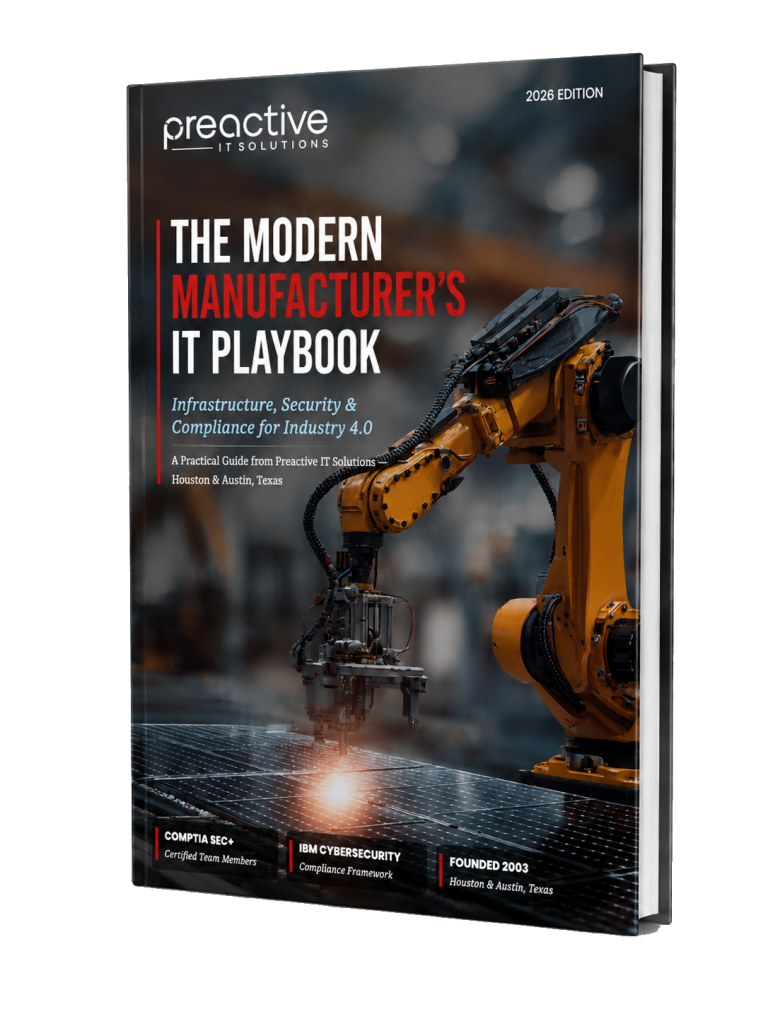
The Modern Manufacturer’s IT Playbook
Infrastructure, Security &
Compliance for Industry 4.0

What Our Client's are Saying
Our Locations

Houston TX
Preactive IT Solutions, LP
1220 Blalock Road, Suite 345
Houston, Texas 77055
Phone: (832) 583-3707
Email: [email protected]

Austin TX
Preactive IT Solutions, LP
2505 E 6th St Suite C,
Austin, TX 78702
Phone: (512) 812-7227
Email: [email protected]

San Antonio, TX
Preactive IT Solutions, LP
700 North Saint Mary's Street, Suite 1210
San Antonio, Texas 78205
Phone: (210) 864-2929
Email: [email protected]

Beaumont, TX
Preactive IT Solutions, LP
985 I-10 St suite 103,
Beaumont, TX 77706
Phone: (409) 239-0004
Email: [email protected]

Charles Swihart
Visonary & Founder
Charles has become a recognized authority in delivering IT support and solutions tailored for small to medium-sized businesses, particularly in the manufacturing, engineering, and construction sectors. His vision for Preactive IT Solutions has always been to provide enterprise-level IT services to businesses that typically lack the resources of larger corporations.
Manufacturing Cybersecurity Insights
As a technology advisor to manufacturing and industrial organizations for more than 25 years, I’ve seen cybersecurity evolve from an IT support function into a critical component of operational resilience. Today’s factories depend on tightly integrated IT and operational technology systems, meaning cyber incidents can halt production and disrupt supply chains. In this series, I examine how ransomware threats, OT/IT convergence, and cyber insurance requirements are reshaping manufacturing security architecture—and why segmentation, identity controls, and resilient recovery strategies are now essential to maintaining uptime.

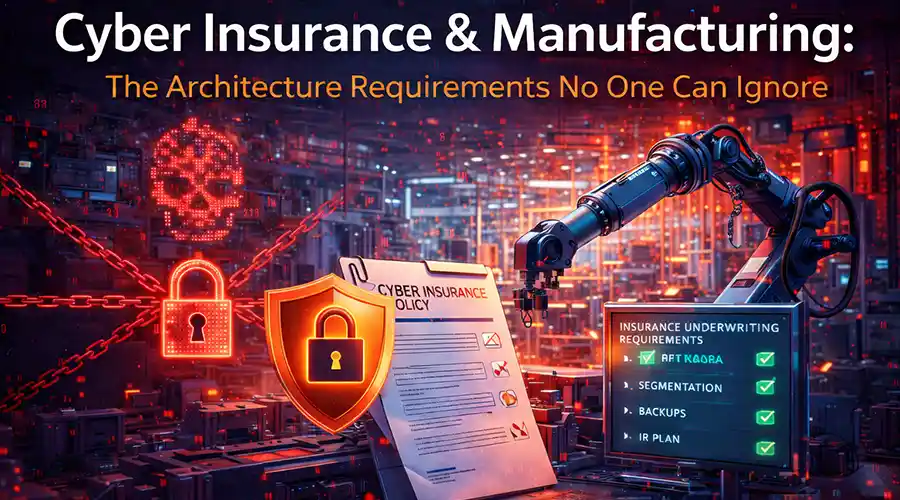
Cyber Insurance for Texas Manufacturers in 2026: The Architecture Requirements That Determine Insurability
Additional IT Resources for Manufacturing
- Cybersecurity for manufacturing industrial control systems
- Network infrastructure and uptime for manufacturing facilities
- IT services for industrial automation and smart manufacturing
- Manufacturing compliance and cybersecurity framework support
- SOLIDWORKS infrastructure and performance support
- Manufacturing IT Services for Texas Facilities
Frequently Asked Questions: IT Support for Manufacturing
What is Industry 4.0 and how does IT support it?
Industry 4.0 refers to the fourth industrial revolution, characterized by the integration of digital technologies into manufacturing operations. This includes connected systems, real-time data, automation, and intelligent production environments. IT supports Industry 4.0 by maintaining the infrastructure that keeps these systems operational — including networks, servers, edge computing platforms, IIoT connectivity, and the integrations between production and business systems.
What IT infrastructure does smart manufacturing require?
Smart manufacturing environments require stable, high-performance infrastructure including managed networks capable of supporting high device density, low-latency data transmission, and continuous system communication. This also includes servers and storage for MES and ERP platforms, edge computing hardware, IIoT device management, OT network segmentation, and reliable connectivity between plant-floor systems and business applications.
What is the difference between IT and OT in manufacturing?
Information Technology (IT) covers business systems such as servers, workstations, cloud platforms, and enterprise applications. Operational Technology (OT) covers the industrial systems that directly control production — including PLCs, SCADA platforms, HMIs, CNC machinery, and robotics. In modern manufacturing, IT and OT environments are increasingly converged, which improves efficiency but also introduces complexity and security considerations that require specialized management.
How does IIoT affect manufacturing IT infrastructure?
Industrial Internet of Things (IIoT) devices continuously generate data on machine performance, environmental conditions, and production throughput across the plant floor. This increases network device density, creates continuous bandwidth demand, and introduces mixed communication protocols. IT infrastructure must be designed to handle these demands reliably — including network capacity, segmentation between IIoT and business systems, and monitoring to detect connectivity or performance issues before they affect production.
What is edge computing in manufacturing and why does it matter?
Edge computing moves data processing closer to the source — in manufacturing, that means closer to the plant floor rather than routing everything through centralized cloud or data center infrastructure. This reduces latency for time-sensitive production decisions, improves responsiveness in automated environments, and reduces dependency on external connectivity. As more manufacturers adopt real-time data systems and IIoT devices, edge computing infrastructure becomes a critical component of reliable production operations.
How do MES and ERP systems work together in manufacturing?
Manufacturing Execution Systems (MES) provide real-time visibility into production — tracking machine output, work orders, and floor-level operations. Enterprise Resource Planning (ERP) systems manage business functions including inventory, scheduling, procurement, and financial reporting. When these systems are properly integrated, production data flows between the plant floor and business operations in real time, enabling accurate scheduling, inventory management, and reporting. When integration breaks down, manufacturers experience data gaps, scheduling errors, and production inefficiencies.
How does IT downtime affect smart manufacturing production?
In smart manufacturing environments, IT and production are tightly interdependent. If business systems, networks, or data platforms become unavailable, production can halt even when physical equipment remains operational. Workers may lose access to work instructions, scheduling systems, or engineering data. MES and ERP platforms may go offline, disrupting production visibility and coordination. Industry research consistently shows that unplanned downtime costs manufacturers billions annually, with per-hour losses ranging from tens of thousands to hundreds of thousands of dollars depending on facility size and production scale.
What should manufacturers look for in an IT provider for industrial automation?
Manufacturers evaluating IT providers for industrial automation environments should look for demonstrated experience with production-dependent infrastructure, not just general business IT support. Key considerations include familiarity with OT environments and IT/OT convergence, the ability to support MES, ERP, and IIoT platforms, a proactive monitoring approach aligned to uptime requirements, and experience designing networks for high device density and real-time data demands. A provider that treats manufacturing IT as a production-critical function — rather than a support function — is better positioned to maintain the reliability that smart manufacturing requires.