
Network Infrastructure & Uptime for Manufacturing Facilities
Ready to see how managed IT can transform
your manufacturing enterprise?

Engineered Infrastructure That Keeps Production Running
Manufacturing uptime is not determined by machines alone. It is determined by the infrastructure that supports them. In modern environments, production depends on continuous communication between systems, and even minor instability can create measurable disruption.
At Preactive IT Solutions, we work with manufacturers across Houston and South Texas that require stable, predictable infrastructure. Our focus is not general IT support. It is maintaining the systems that production depends on.
Manufacturing Uptime Starts with Network Design
In manufacturing environments, the network is part of the production process. Systems must communicate continuously, and any delay or interruption immediately affects output. Unlike office environments, there is little tolerance for inconsistency.
Modern production networks must support a wide range of operational requirements, including:
- Continuous system communication
- Low-latency data transmission
- High device density
- Integration of legacy and modern systems
If the network is not designed for these conditions, instability becomes unavoidable.
The Cost of Downtime in Production Environments
Downtime in manufacturing is not isolated to IT systems. It affects throughput, delivery timelines, and operational efficiency across the entire facility. Even short disruptions create cascading delays across production lines.
The financial impact is measurable across multiple industry studies. While costs vary by facility, research consistently shows that downtime introduces both direct financial loss and broader operational disruption.
| Impact Area | Industry Finding | Source |
|---|---|---|
| Productivity Loss | Unplanned downtime can reduce productivity by 5% to 20%. | U.S. Department of Energy |
| Annual Cost | Unplanned downtime costs industrial manufacturers an estimated $50 billion annually. | Plant Engineering |
| Per Facility Cost | Large manufacturers can lose up to $129 million per year due to downtime. | Siemens |
| Per Hour Cost | Downtime can cost manufacturers between $10,000 and more than $250,000 per hour, depending on production scale. | Industry Estimates / IIoT Research |
| Operational Impact | Real-time production environments increase reliance on continuous system availability. | IBM Institute for Business Value |
Production Continuity Depends on Infrastructure Stability
For plant leaders, downtime is not just a technical problem. It is a signal that the underlying manufacturing IT infrastructure may not be engineered for the production demands placed on it. Strong plant network uptime depends on stable architecture, redundant systems, and continuous industrial network monitoring.
In practice, this translates into:
- Delayed production schedules
- Interrupted machine operation
- Backlog across production lines
- Missed delivery commitments
- Increased labor and recovery costs
In this environment, infrastructure reliability is not a support function. It directly determines production consistency and business performance.

Why Manufacturing Networks Break Down
Most manufacturing networks were not engineered for current production demands. They evolved over time as new systems were added, often without a cohesive design strategy. This creates instability under load and makes performance unpredictable.
As Charles Swihart, Founder and CEO of Preactive IT Solutions, explains in his analysis of reshoring trends in Texas manufacturing, infrastructure is often the limiting factor in production scalability. Many environments continue to rely on networks that were never engineered for real-time data, creating performance bottlenecks that only become visible under load.
Read Charles Swihart’s analysis of Texas manufacturing infrastructure
These issues are not always visible until systems are pushed to their limits. Common breakdown points include:
- Flat network architecture with limited control
- Legacy infrastructure unable to handle current data demands
- Bandwidth constraints during peak production
- Lack of redundancy in critical network paths
- Environmental exposure affecting hardware performance
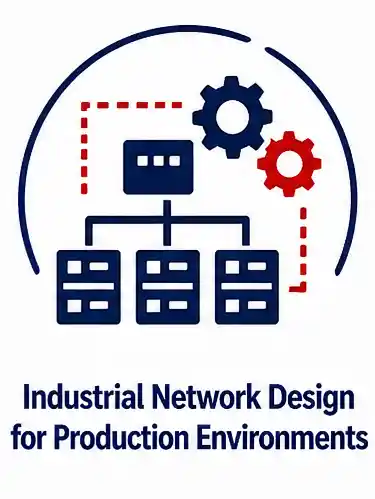
Industrial Network Design for Production Environments
A properly designed network provides control, predictability, and performance. It ensures that critical systems operate consistently, even under heavy load. This requires intentional architecture, not incremental changes.
Effective manufacturing network design includes:
- VLAN segmentation to control traffic and isolate systems
- Traffic prioritization for production-critical applications
- Structured communication paths between systems
- Scalable architecture to support future growth
The objective is not complexity. It is stability under real-world conditions.

Industrial WiFi and Plant Floor Connectivity
Wireless connectivity introduces flexibility, but it also introduces variability if not designed correctly. Manufacturing environments present challenges that do not exist in standard office deployments.
Facilities must account for physical and operational constraints such as:
- Interference from machinery and materials
- Large coverage areas with inconsistent signal strength
- Device mobility across production zones
- Environmental conditions that affect signal reliability
Industrial WiFi must be engineered to support production, not simply deployed for convenience.
Talk to Preactive IT Solutions
If you are evaluating IT support for smart manufacturing, Industry 4.0 IT services, or manufacturing automation IT support, Preactive IT Solutions can help you assess your environment and identify where instability or risk exists.
We work with manufacturers across Houston and South Texas that need reliable systems, stable integration, and infrastructure that supports modern production.
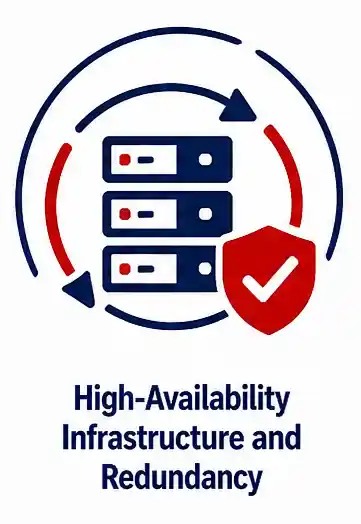
High-Availability Infrastructure and Redundancy
Manufacturing environments require infrastructure that continues operating when components fail. Downtime is often caused by single points of failure that were never addressed during initial deployment.
High-availability design focuses on continuity through:
- Redundant switching paths
- Failover configurations for critical systems
- Elimination of single points of failure
- Hardware aligned to operational demands
The goal is not to prevent every issue, but to prevent issues from stopping production.

Failover Internet and External Connectivity
External connectivity is often required for cloud platforms, vendor support, and centralized systems. If internet access fails, production workflows can be disrupted even when internal systems remain functional.
Reliable connectivity requires:
- Primary and secondary internet circuits
- Automatic failover between providers
- Carrier diversity to reduce dependency risk
- Continuous monitoring of connection performance
Failover planning ensures that external dependencies do not become production risks.

Environmental Challenges in Manufacturing IT
Manufacturing environments introduce physical conditions that directly affect infrastructure performance. These factors are often overlooked but play a significant role in long-term reliability.
Critical environmental considerations include:
- Heat and humidity
- Dust and airborne contaminants
- Electrical interference, or EMI
- Vibration and equipment movement
Infrastructure must be deployed with these conditions in mind to maintain consistent operation.

Proactive Monitoring and SLA-Driven Support
Manufacturing environments require proactive management, not reactive support. Issues must be identified and resolved before they impact production.
A process-driven approach includes:
- Continuous network performance monitoring
- Capacity tracking and trend analysis
- Alerting and rapid response
- SLA-driven support expectations
At Preactive IT Solutions, our focus is on identifying instability early and maintaining consistent system performance.
The Modern Manufacturer’s IT Playbook
Infrastructure, Security &
Compliance for Industry 4.0


Additional IT Resources for Manufacturing
- Cybersecurity for manufacturing industrial control systems
- Network infrastructure and uptime for manufacturing facilities
- IT services for industrial automation and smart manufacturing
- Manufacturing compliance and cybersecurity framework support
- SOLIDWORKS infrastructure and performance support
- Manufacturing IT Services for Texas Facilities

What Preactive IT Solutions Delivers
We provide managed IT services aligned specifically to manufacturing environments. Our approach is centered on infrastructure stability, uptime, and operational continuity.
Our services include:
- Industrial network design and optimization
- Infrastructure upgrades for performance and reliability
- Redundancy and failover planning
- Industrial WiFi design and deployment
- Proactive monitoring and support
- Multi-site connectivity solutions
We focus on maintaining the infrastructure that production depends on.

Meet Some of Our Certified IT Support Specialists

Marlon Hyun
IT Support Specialist
CompTIA Security+ ce Certification, Cybersecurity Compliance Framework & System Administration



CASE STUDY
Global SOLIDWORKS PDM
Replication Deployment
“For any oil & gas company with distributed SOLIDWORKS teams, the investment is well worth it.”
“Preactive IT handled the implementation smoothly, even across foreign IP providers and large time-zone gaps.”
Eric O’Neal
VP of Global Operations
WWT International
Manufacturing in Texas Requires Operational Reliability
Manufacturing in Houston and across South Texas operates under constant pressure. Many facilities support energy, engineering, fabrication, and industrial supply chains where downtime has immediate financial impact.
These environments are:
- Time-sensitive
- Highly integrated
- Dependent on continuous system availability
In this region, IT failures do not stay contained. They affect production, delivery schedules, and customer commitments.
That is why infrastructure stability is not optional. It is operational.
What Our Client’s are Saying
Our Locations

Houston TX
Preactive IT Solutions, LP
1220 Blalock Road, Suite 345
Houston, Texas 77055
Phone: (832) 944-6250
Email: [email protected]

Austin TX
Preactive IT Solutions, LP
2505 E 6th St Suite C,
Austin, TX 78702
Phone: (512) 812-7227
Email: [email protected]

San Antonio, TX
Preactive IT Solutions, LP
700 North Saint Mary’s Street, Suite 1210
San Antonio, Texas 78205
Phone: (210) 864-2929
Email: [email protected]

Beaumont, TX
Preactive IT Solutions, LP
985 I-10 St suite 103,
Beaumont, TX 77706
Phone: (409) 239-0004
Email: [email protected]
Frequently Asked Questions
What is manufacturing network infrastructure?
Manufacturing network infrastructure refers to the systems that connect production equipment, software platforms, and users across a facility. This includes switches, routers, servers, wireless networks, and connectivity between plant-floor systems and business applications.
Why is network uptime critical in manufacturing?
Network uptime is critical because production systems depend on continuous communication. If the network fails, machines may stop, data may become unavailable, and production can be interrupted immediately.
What causes downtime in manufacturing IT environments?
Common causes include network congestion, hardware failure, lack of redundancy, poor infrastructure design, and environmental factors such as heat, dust, or electrical interference.
How does VLAN segmentation improve manufacturing networks?
VLAN segmentation separates different types of network traffic, such as production systems and office systems. This improves performance, reduces congestion, and allows better control over how systems communicate.
What is industrial WiFi & how is it different from office WiFi?
Industrial WiFi is designed for large, complex environments with interference from machinery and materials. It requires specialized planning to ensure consistent coverage and reliable connectivity across the plant floor.
What is high-availability infrastructure in manufacturing?
High-availability infrastructure uses redundancy and failover systems to ensure operations continue even when components fail. This includes redundant network paths, backup systems, and failover configurations.
Why is failover internet important for production facilities?
Failover internet ensures that if one connection goes down, another takes over automatically. This is critical for maintaining access to cloud systems, vendor support, and external applications used in production.
How does proactive IT monitoring reduce downtime?
Proactive monitoring identifies performance issues, capacity limits, and system failures before they impact operations. This allows IT teams to resolve problems early and maintain consistent uptime.